
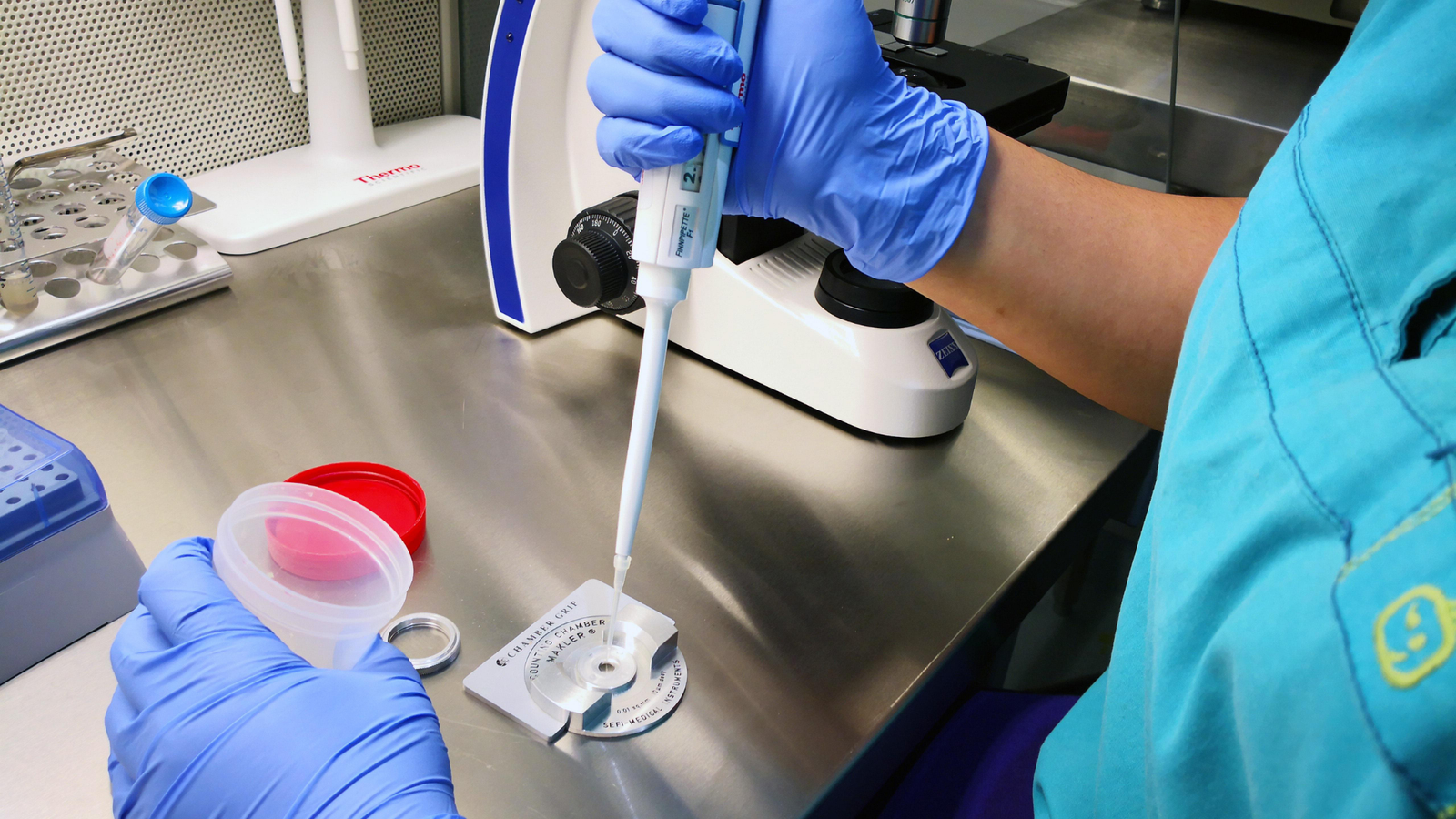
Embryo Freezing Vitrification
Embryo Freezing (Vitrification): Securing Your Future Family with Advanced Fertility Care
Embryo freezing, technically known as embryo cryopreservation, is a revolutionary technology that allows individuals and couples to freeze and store embryos created during an In Vitro Fertilization (IVF) cycle for future use. This process provides flexibility, increases the chances of pregnancy from a single egg retrieval, and offers a powerful way to plan for the future. As a leading destination for advanced fertility treatments, Cyprus IVF clinics utilize the most modern techniques, such as vitrification, to ensure the highest possible success rates.
What is Embryo Freezing and How is it Done?
Embryo freezing is an integral part of modern IVF treatment. After eggs are retrieved and fertilized in the lab, any high-quality embryos that are not used in the initial ("fresh") transfer can be preserved. The process involves several key stages:
Who Should Consider Embryo Freezing?
Freezing embryos is a valuable option in many different scenarios:
Couples with Surplus Embryos: It is the most common reason. If an IVF cycle produces more high-quality embryos than can be safely transferred at once, the remaining ones can be frozen.
To Reduce Health Risks: If a woman is at risk of Ovarian Hyperstimulation Syndrome (OHSS), a "freeze-all" cycle may be recommended, where all embryos are frozen and transferred later in a more natural cycle.
For Preimplantation Genetic Testing (PGT): PGT involves testing embryos for genetic or chromosomal abnormalities. This requires freezing the embryos while waiting for the test results.
Fertility Preservation: For individuals or couples who wish to preserve their joint fertility before medical treatments (like chemotherapy), or to delay parenthood for personal or career reasons.
To Increase Pregnancy Chances: Using frozen embryos for a subsequent attempt (a Frozen Embryo Transfer or FET) is less invasive and less expensive than starting a whole new IVF cycle.
The Power of Vitrification and Frozen Embryo Transfer (FET)
Vitrification has revolutionized embryo freezing. Unlike older slow-freezing methods, vitrification has a post-thaw survival rate of over 95%. This means that almost all high-quality embryos that are frozen will be viable for transfer later.
When you decide to use your frozen embryos, you will undergo a Frozen Embryo Transfer (FET) cycle. This involves preparing your uterine lining with hormones to make it receptive, after which the thawed embryo is transferred. Many studies show that FET cycles can have success rates that are equal to, and sometimes even higher than, fresh transfers. This is because the body is not under the stress of the ovarian stimulation medications used during the egg retrieval phase.
Why Choose Cyprus IVF for Embryo Freezing?
Leading Cyprus IVF clinics are at the forefront of using vitrification and achieving excellent results with FET cycles. By choosing a top-tier clinic, you benefit from:
Expert embryologists skilled in advanced vitrification techniques.
State-of-the-art laboratory equipment ensuring the highest standards of care.
High success rates for both freezing and subsequent transfer cycles.
Embryo freezing is no longer just a secondary option; it is a cornerstone of effective and patient-friendly fertility treatment. It offers a strategic way to maximize your chances of success while giving you control over your family-building journey.